A Serpentine Designed by Lanza Atelier
Throughout the summer and until October, the Pavilion will host Serpentine’s vibrant public programme
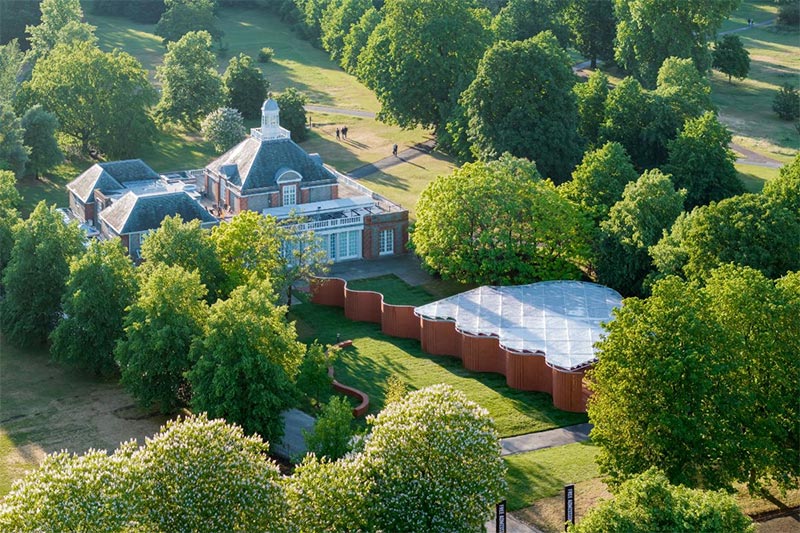
The Serpentine Pavilion 2026, a serpentine, designed by Mexican architecture studio LANZA atelier, founded by Isabel Abascal and Alessandro Arienzo, will open to the public on Friday 6 June 2026.
The 2026 Pavilion is supported by Goldman Sachs for the 12th consecutive year. In addition, we are pleased to announce Rolex as the Official Timepiece of the Serpentine Pavilions as of this year.
As the Pavilion reaches its 25th edition, Serpentine will celebrate this landmark anniversary and the legacy of inaugural Pavilion architect, Zaha Hadid, through a special collaboration with the Zaha Hadid Foundation and the Architectural Association in the autumn.
For this year’s Serpentine Pavilion, LANZA atelier took its inspiration from the architecture feature known as a serpentine or crinkle-crankle wall which forms one side of the pavilion. This type of brick wall, composed of alternating curves, is commonly found in the English county Suffolk but originates in ancient Egypt and was later introduced to England by Dutch engineers. Its curvilinear form provides stability through lateral support, meaning the one-brick-wide serpentine wall requires fewer bricks than a straight wall. The eponymous feature also subtly nods to the nearby Serpentine lake, named for its gentle curvature, evoking the form of a serpent.
In dialogue with the surrounding landscape, a second wall works in harmony with the tree canopy without disrupting it, while the main structure is positioned on the Northern side of the site. A translucent roof rests lightly on brick columns evoking a grove of trees. The pavilion’s configuration allows light and air to permeate the space, softening the boundary between enclosure and openness. LANZA atelier chose brick as the primary material to celebrate the English garden tradition and establish a conversation with the existing brick façade of the Serpentine South Gallery, once a tea pavilion itself. Constructed from a rhythmic repetition of brick columns that transform the wall from opaque to permeable, the Pavilion challenges the idea of walls as features of division and instead invites connection as it allows visitors to see through.